


Western Manitoba Science Fair Stickers
Fast Facts
Background
This project gave me the opportunity to design and produce promotional stickers for the Western Manitoba Science Fair.
Project Results
Learning more about sticker production helped me create products that promoted the Science Fair and gave attendees a fun little takeaway from the event.

Lessons learned
-
Practice in creating designs for a marketing strategy
-
Practice in printing and cutting stickers
-
Practice in laminating prints
Software


Case Study
Overview
This project involved designing and printing stickers for the Western Manitoba Science Fair (WMSF) held in April of 2026. Using the design process, I designed the stickers digitally, printed, cut, and laminated them, and prepared them to be handed out to the science fair’s attendees.
The Challenge
The challenging here was learning the best practices for laminating. I produced the stickers within Assiniboine College’s Creative CoLab, which had an application table that would press laminate down on top of prints.
The lamination process was tricky, as it was easy for wrinkles and air bubbles to appear under the laminate. To succeed with this project, I wanted to learn to improve my laminating skills so the final results would have little to no bubbles or wrinkles.
Design Process
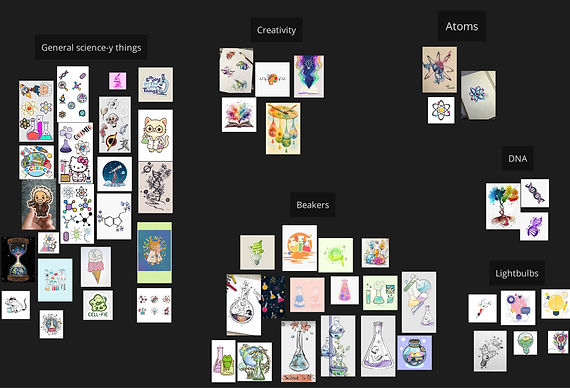
1. Inspiration. The marketing strategy for WMSF 2026 was “creativity through science”. My designs would have to reflect this theme, so I looked at lots of ideas relating to this on Pinterest, and created a moodboard:
2. Ideation. Using my moodboard as reference I sketched out ideas for sticker designs, experimenting with themes of beakers, lightbulbs, space, and plants:
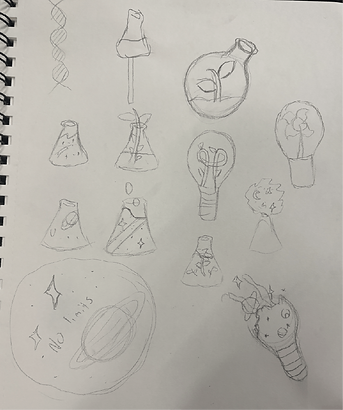

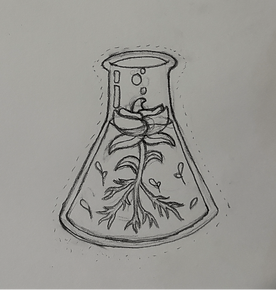
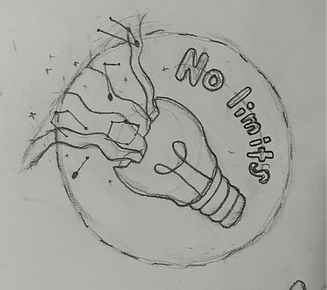
I refined my ideas into a few that I believed were strongest. I showed these sketches to my peers for feedback, and the most popular designs were the flask, light bulb, and atom.

I then drew a few cleaned up sketches using my collected feedback:

3. Refinement. I created digital versions of my designs.
WMSF’s colours for that year were navy blue and teal, which I made sure to incorporate into my designs. The pink line around each one shows where I intended for the stickers to be cut out.

I showed my designs to my peers again, collected more feedback, and refined my designs further.
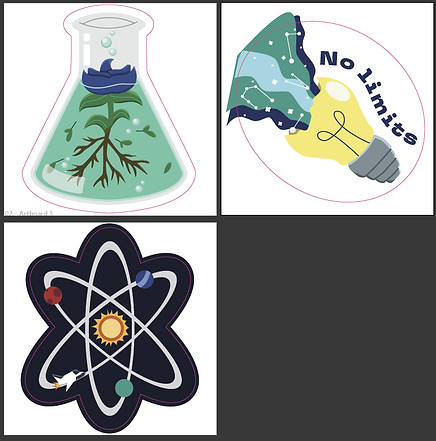
4. Printing. Using the Creative CoLab’s large-format printing machines, I printed a few test sheets of stickers to practice laminating. Once I got the hang of it, I did the final prints:
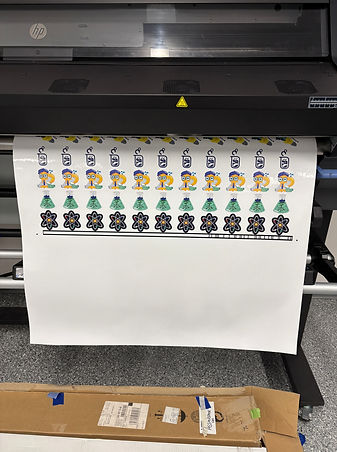

These prints also included WMSF’s 2026 logo and mascot designs, which were created by two of my peers.
I cut the stickers using the CoLab’s cutting machine, weeded out the excess material, and the stickers were finished:

Lessons Learned
-
Practice in creating designs for a marketing strategy
-
Practice in printing and cutting stickers
-
Practice in laminating prints
Conclusion
This project helped me learn to produce higher-quality stickers than I had made before. Adding lamination was a new step in my process, and taking the time to get comfortable with it enhanced the quality of my work.
The stickers themselves were very well-received by attendees at the Science Fair. They served as a fun little giveaway that would promote WMSF’s values while providing their audience with a delightful token from the day.